
Everything Hubbee does — laid out plainly.
Eight things, one tool. Pick a topic on the left, dig into the details on the right.
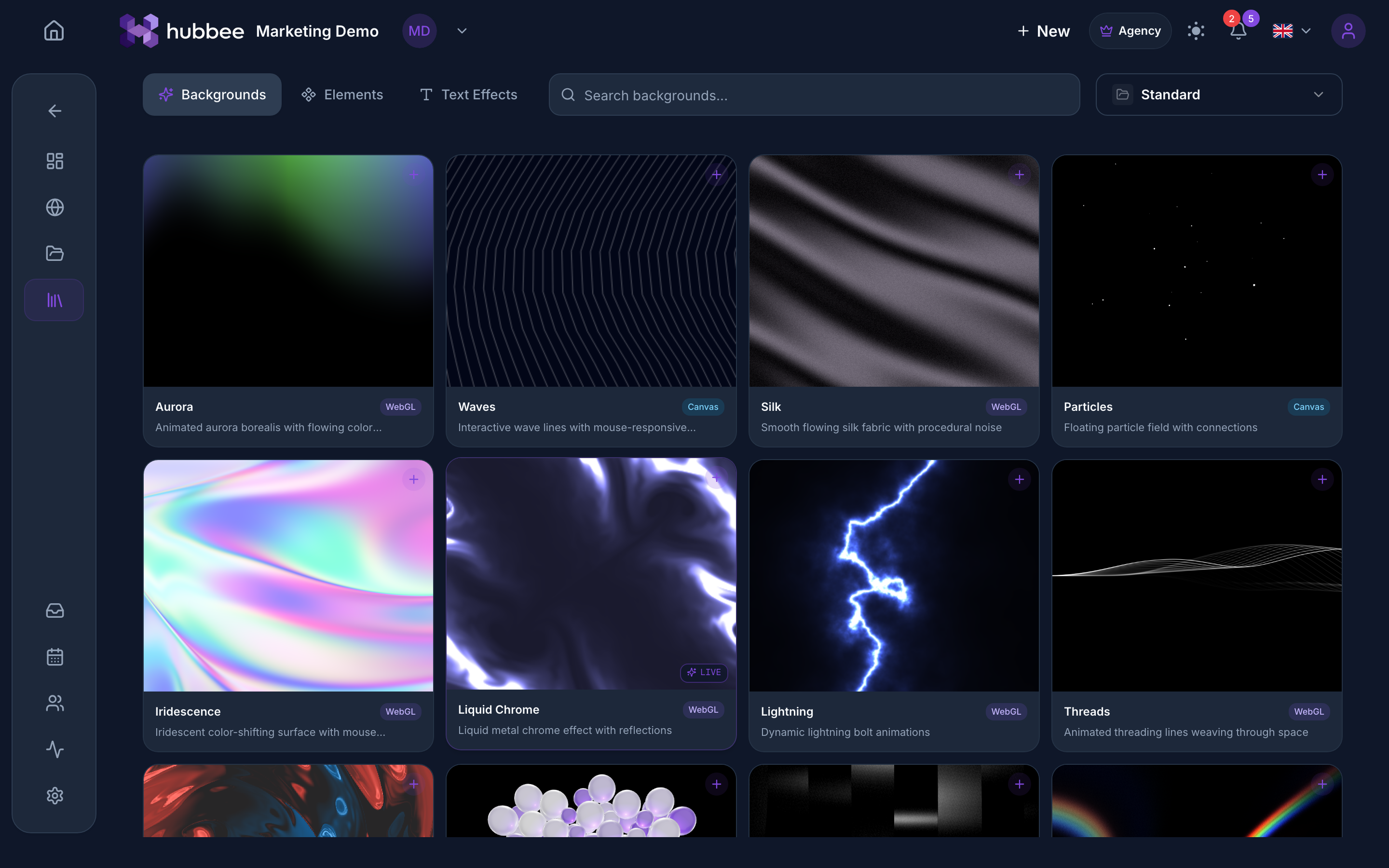
A library of ready-made visuals — pushed to any site.
Drop in a moving background, an interactive gallery, or an animated headline. Pick from a curated library, configure it in a live preview, push it where it should live. The plugin downloads only what each page actually uses.
A library of ready-made visuals — pushed to any site.
Drop in a moving background, an interactive gallery, or an animated headline. Pick from a curated library, configure it in a live preview, push it where it should live. The plugin downloads only what each page actually uses.
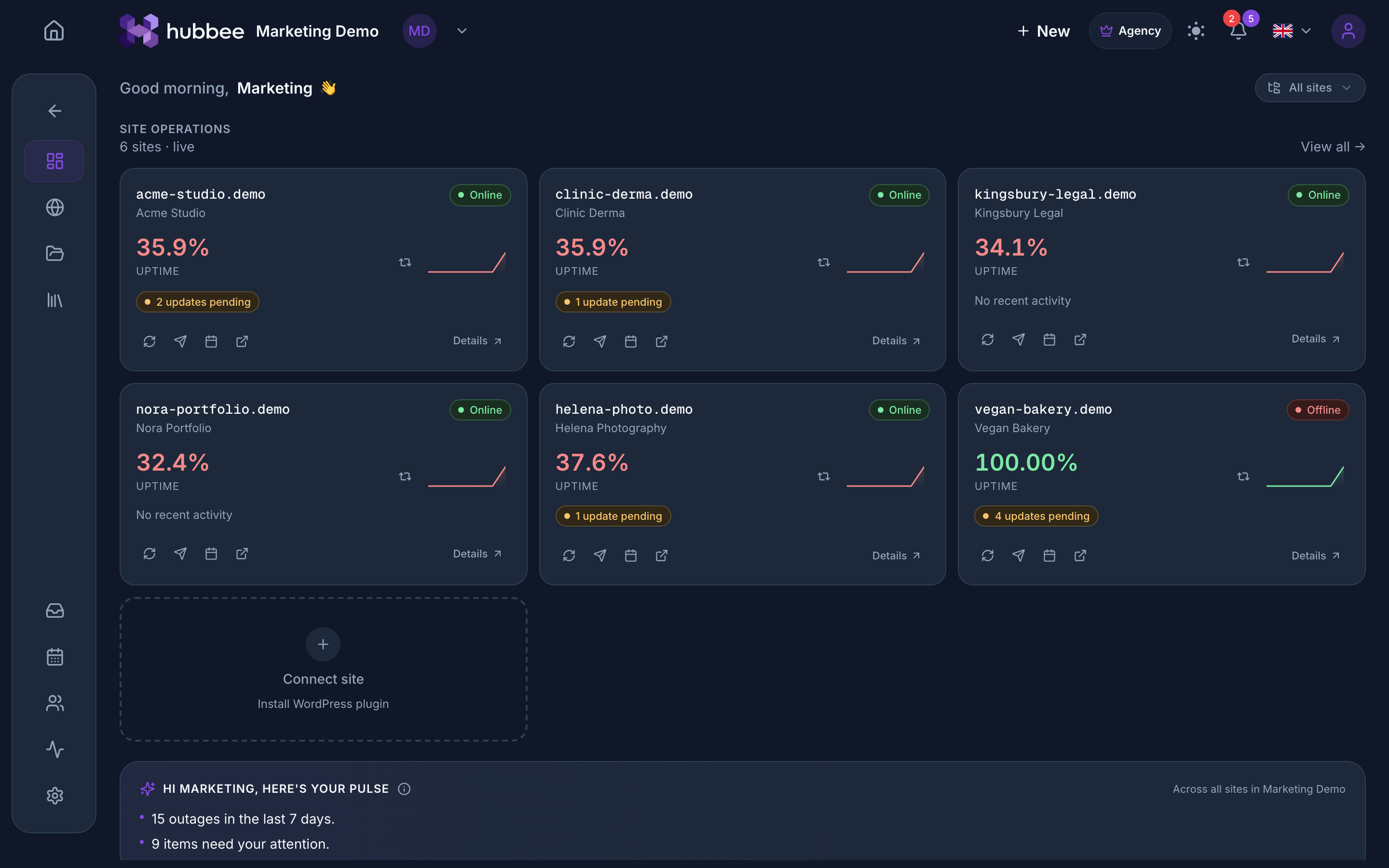
Every site you manage, in one grid.
Stop opening seven WordPress admins to check if everything's fine. Hubbee shows every connected site in one view — version, status, plugin inventory, last sync. Filter by group, search by name, push to many at once.
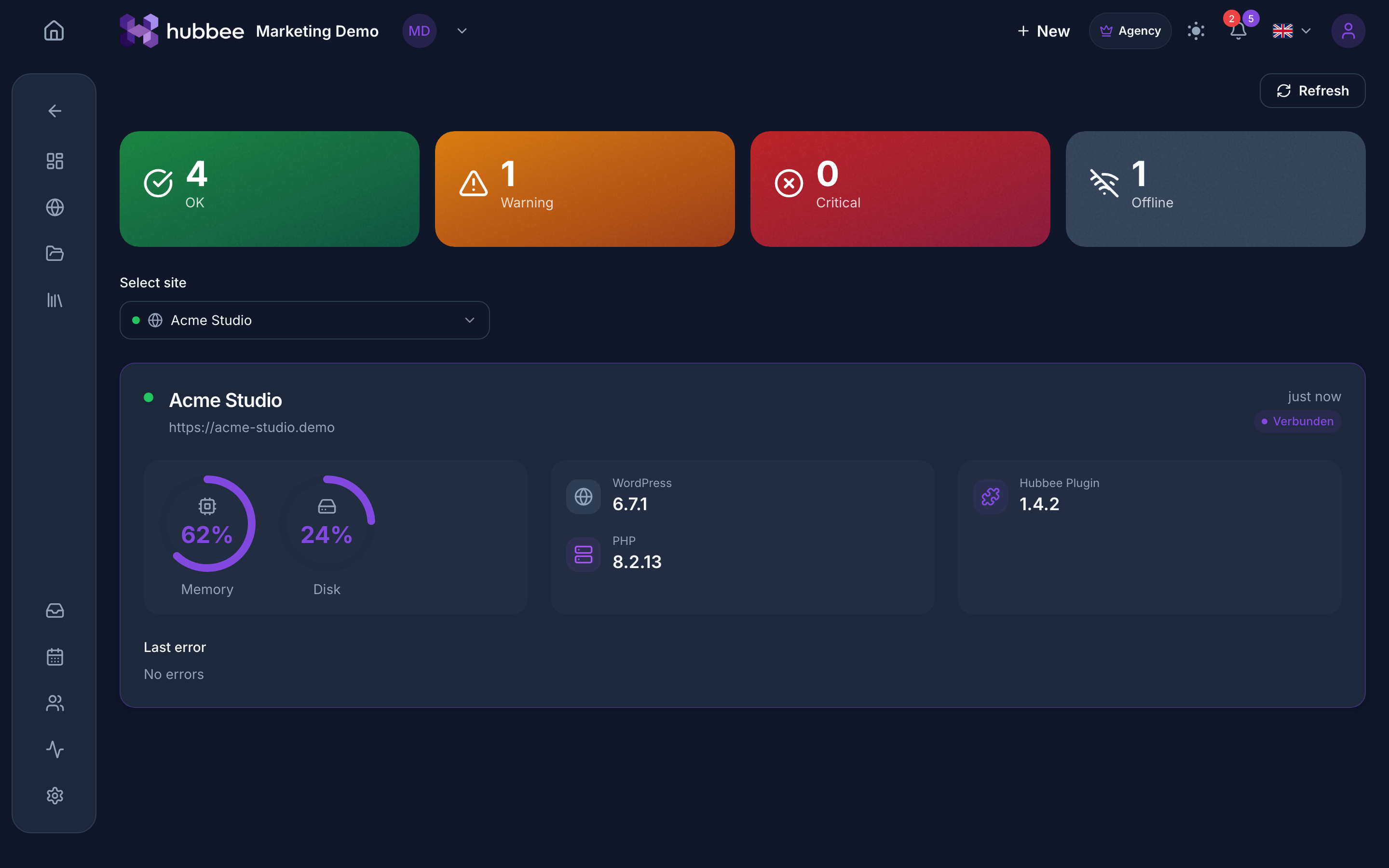
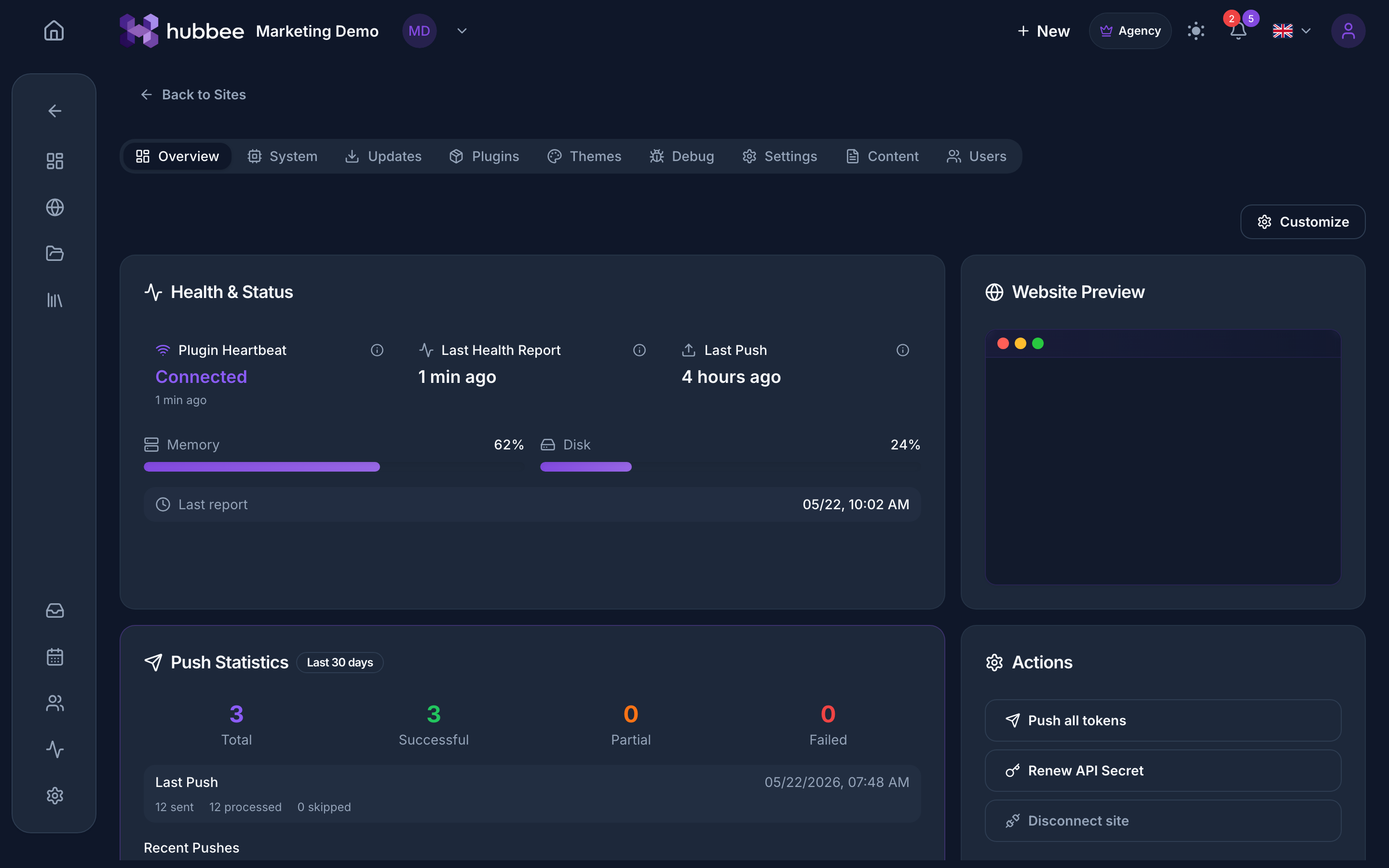
Every site has a pulse — and we listen for it.
Each site quietly tells Hubbee 'I'm alive' on a rhythm you set — every minute, every two, up to every five. When the rhythm breaks, you know. Before your client does.
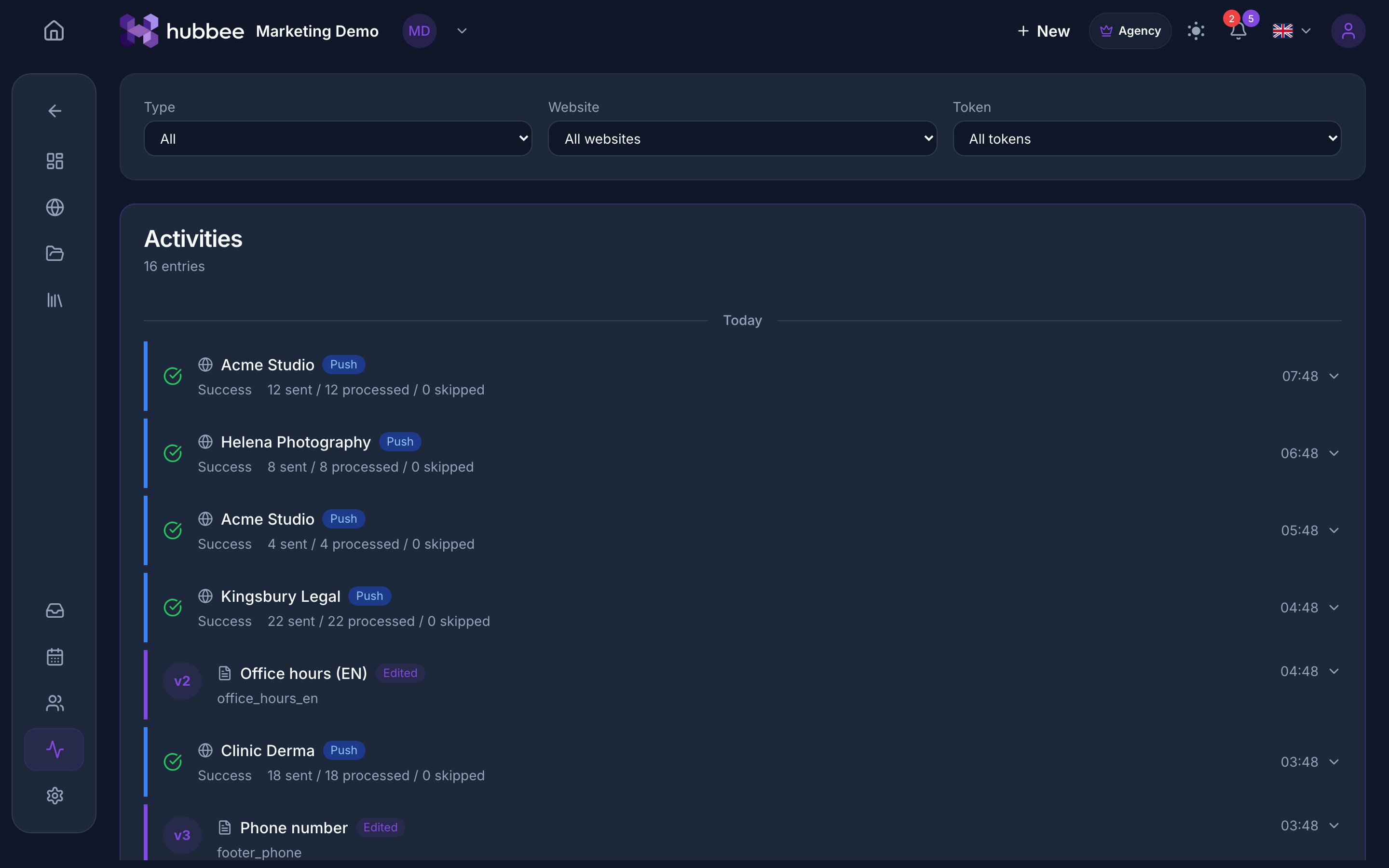
Edit once. Pushed everywhere. Logged forever.
Change a phone number, a holiday banner, a footer link — Hubbee pushes the change to every site that uses it, in parallel. Every push is signed, every result is logged, every change is reversible.
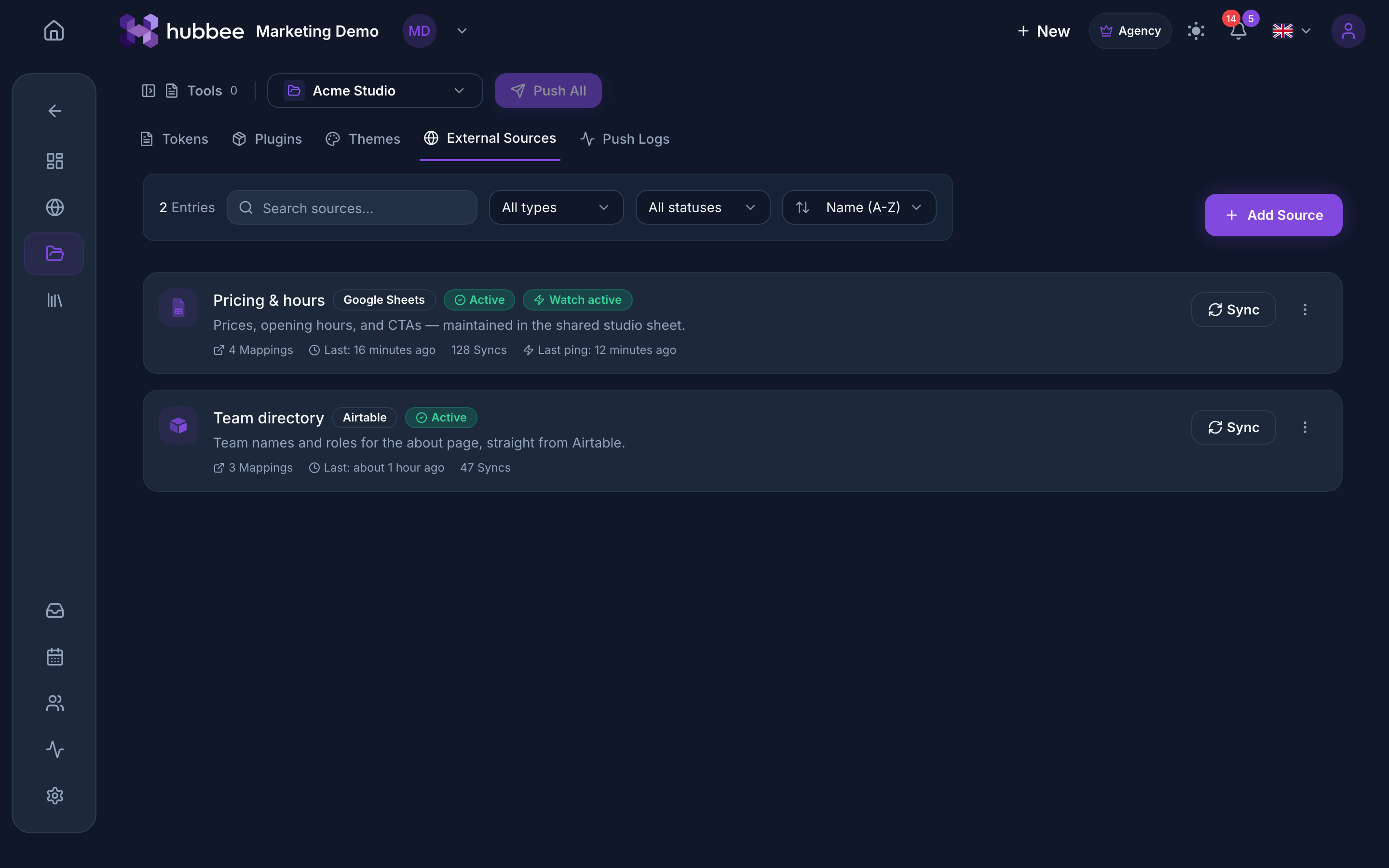
Edit a cell. Watch it go live.
Your prices, opening hours, and team lists already live in a spreadsheet. Connect it once — Hubbee turns rows into tokens and keeps every site that uses them in sync.
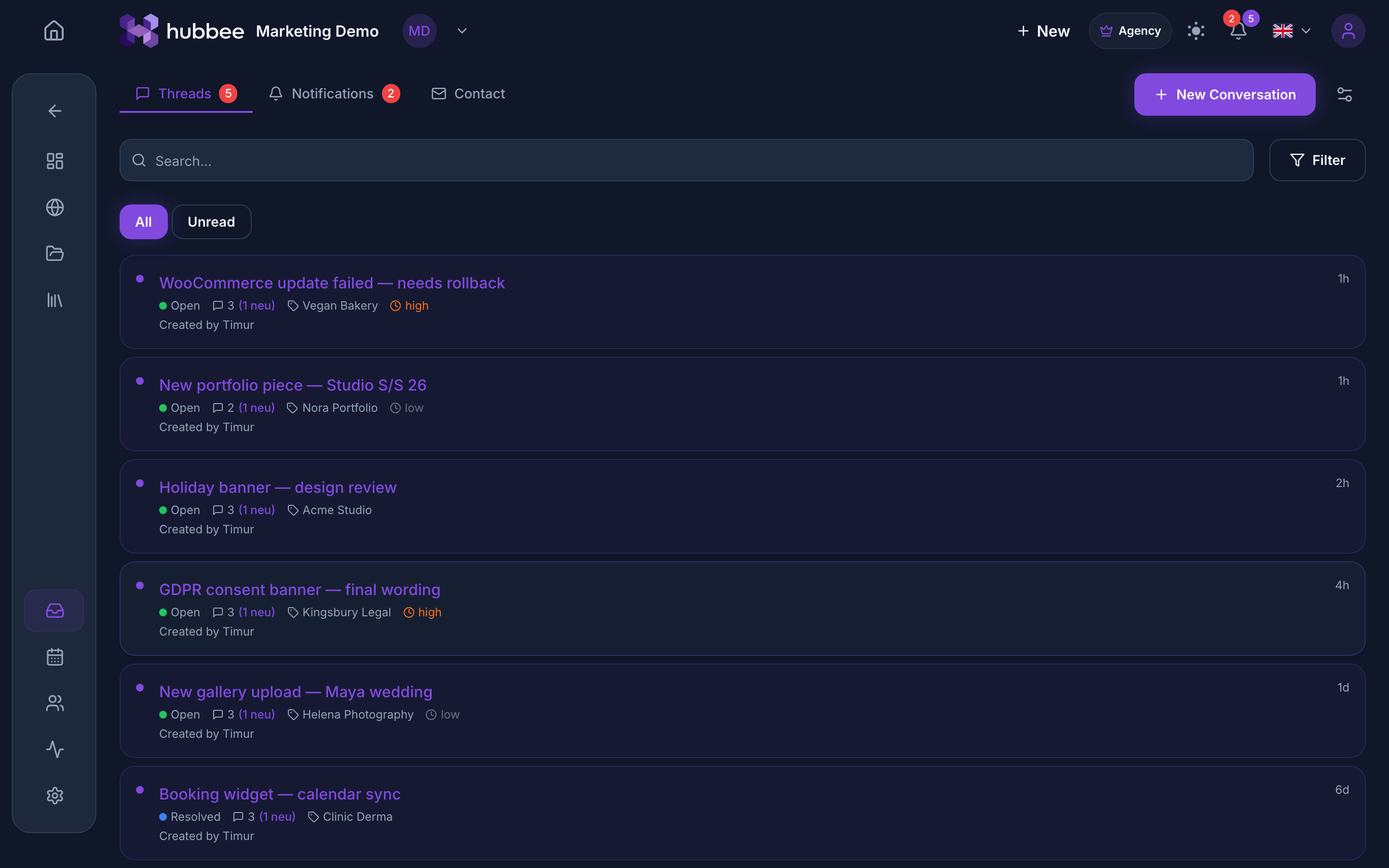
Talk about a site, where the site lives.
Every site gets its own thread. Recurring work goes on a board. Clients, on the Agency plan, get a quiet portal to talk to you — about their sites, on your branding.
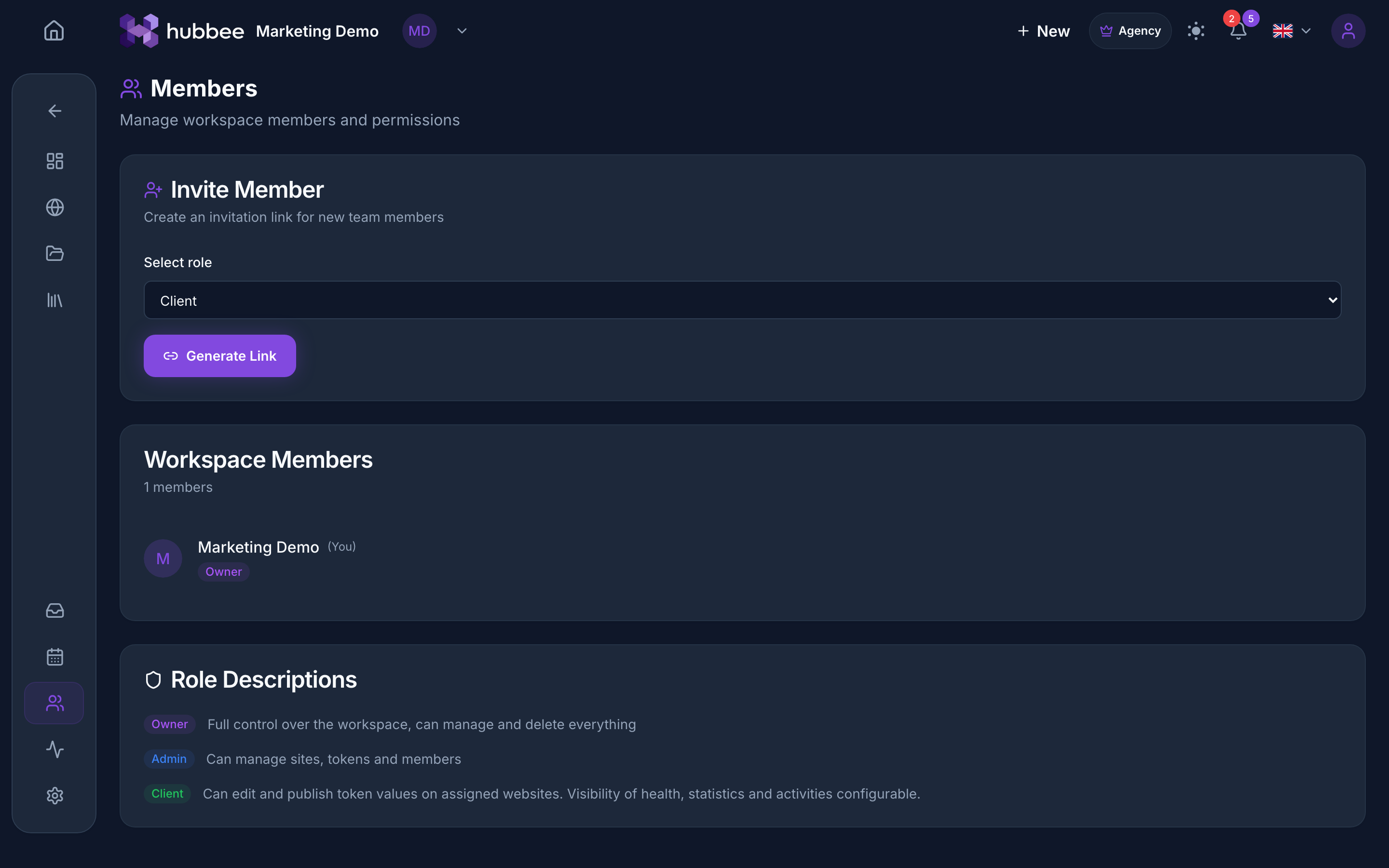
Many clients, many workspaces, one login.
Run an agency with five clients and you don't want their sites mingling. Hubbee keeps each client in its own workspace — their sites, their tokens, their team, their brand. You switch between them with one click.
A small plugin that grows with what you push.
Hubbee's front-end runtime adds just ~2 KB to every page — a tiny loader. As you push assets to that site, it pulls down only the chunks currently in view. A simple site stays light. A complex one loads only what's visible.